Can Sound Heal? What Science Says About Singing Bowls and Sound Baths
Can Sound Heal? What Science Says About Singing Bowls and Sound Baths
From meditation studios to wellness retreats, sound baths and singing bowls have become increasingly popular as tools for relaxation and stress reduction. Many participants describe leaving a session feeling calmer, more grounded, and mentally refreshed. But what does the research actually tell us?
While sound meditation is not a replacement for psychotherapy or medical treatment, early research suggests it may offer meaningful benefits for emotional well-being when used as part of a broader self-care routine.
What Is a Sound Bath?
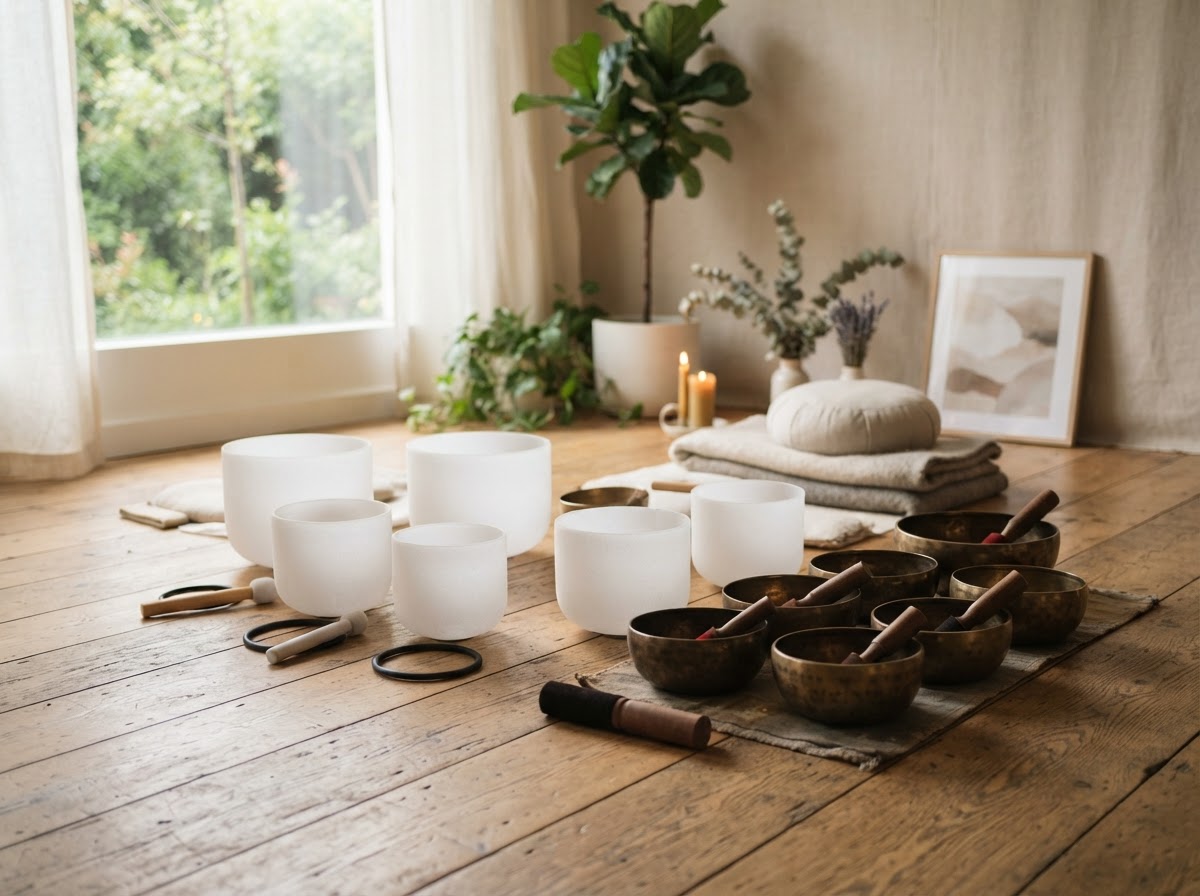
A sound bath is a guided relaxation experience in which participants listen to sustained sounds produced by instruments such as Tibetan singing bowls, crystal singing bowls, gongs, chimes, or tuning forks. Rather than focusing on music with lyrics or melodies, these sessions emphasize vibration, resonance, and slow, repetitive tones that encourage deep relaxation.
Participants typically remain seated or lying down while practicing mindful breathing and allowing the sounds to become the focus of their attention.
How Might Sound Affect the Mind and Body?
Scientists continue to study the relationship between sound and the nervous system. Although researchers are still exploring the exact mechanisms, several factors may contribute to the calming effects many people report.
Sound meditation encourages focused attention, slows breathing, and promotes a relaxation response. These experiences may help shift the body away from chronic stress and toward a state associated with rest and recovery.
The experience also shares similarities with mindfulness meditation by gently redirecting attention away from racing thoughts and toward present-moment awareness.
What Does the Research Show?
One of the most frequently cited studies found that participants reported significant reductions in tension, anxiety, anger, fatigue, and depressed mood following a singing bowl meditation session. Many also experienced an increase in overall feelings of spiritual well-being and relaxation.
Research on music therapy has similarly demonstrated benefits for stress reduction, emotional regulation, and anxiety management across a variety of healthcare settings. While sound baths differ from formal music therapy, both highlight the powerful connection between sound and emotional health.
Although these findings are encouraging, most studies have involved relatively small groups of participants. Larger, well-controlled studies are still needed before stronger conclusions can be made.
Can Sound Actually Heal?
The word healing can mean different things to different people.
There is currently no strong scientific evidence that singing bowls cure medical conditions or directly heal disease through vibration alone. However, there is growing evidence that practices promoting deep relaxation can positively influence emotional well-being, perceived stress, and overall quality of life.
For many individuals, that sense of calm is meaningful. Reducing stress can improve sleep, increase emotional resilience, enhance focus, and make it easier to engage in other healthy behaviors—including psychotherapy.
Should You Try a Sound Bath?
If you enjoy meditation, mindfulness, or other relaxation practices, a sound bath may be a helpful addition to your wellness routine. Most healthy adults can safely participate, although individuals with certain medical conditions, hearing sensitivities, or trauma histories may wish to discuss concerns with their healthcare provider beforehand.
Like many complementary wellness practices, sound meditation is best viewed as one tool among many. It does not replace evidence-based mental health treatment, but it may provide another way to slow down, reconnect with the present moment, and support overall emotional wellness.
The science surrounding sound and mental health continues to evolve. As researchers learn more about how the brain and nervous system respond to sound, we may gain an even deeper understanding of why something as simple as listening can have such a profound impact on how we feel.
References
Goldsby, T. L., Goldsby, M. E., McWalters, M., & Mills, P. J. (2017). Effects of Singing Bowl Sound Meditation on Mood, Tension, and Well-Being: An Observational Study. Journal of Evidence-Based Complementary & Alternative Medicine, 22(3), 401–406.
National Center for Complementary and Integrative Health. (2024). Meditation and Mindfulness: Effectiveness and Safety.
Bradt, J., Dileo, C., Magill, L., & Teague, A. (2016). Music interventions for improving psychological and physical outcomes in people with cancer. Cochrane Database of Systematic Reviews.

Ready to take the next step?
Schedule a consultation to discuss how we can support you.